

Bring the sources together
Searchable official updates sit alongside local surveillance signals and a nationwide health-center directory. Publisher names, dates and original links give readers a route back to the evidence.
Health One Hub · A FizaTech initiative
A public-health dashboard that connects official updates, local trends and nearby care—so finding useful information feels less like research and more like a clear next step.
Explore Health One HubThe challenge
Health information lives across agency websites, surveillance dashboards and provider directories. Each source serves a purpose, but people still have to connect the pieces: What is happening? What does the data mean? Where can I look for care?
Health One Hub was built around that gap. The goal was to bring those questions into one approachable experience while preserving the context that makes the underlying information trustworthy.
The approach
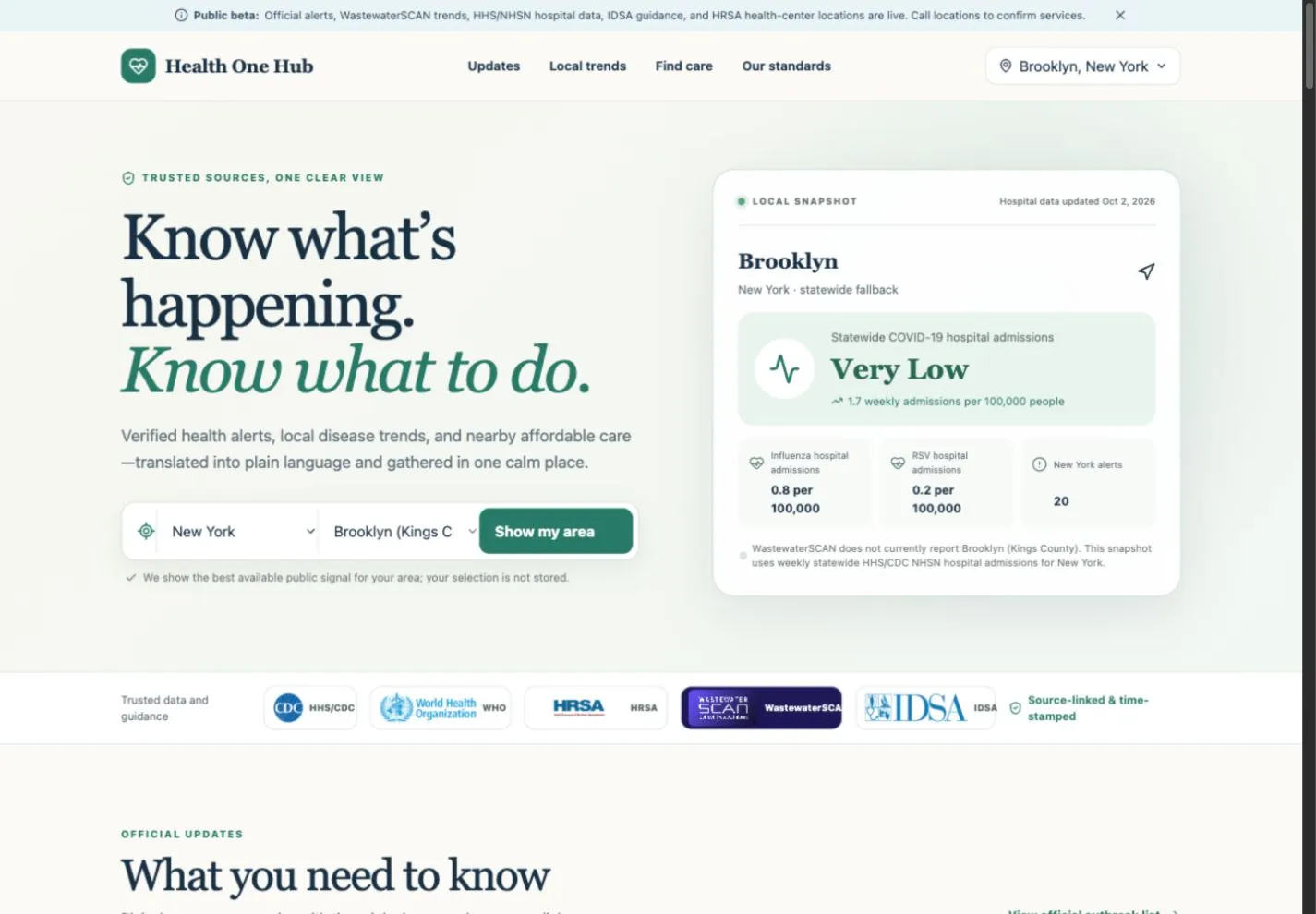
FizaTech combined interface design, data integration and automated updates to create a dashboard organized around what visitors need to understand and do.
Searchable official updates sit alongside local surveillance signals and a nationwide health-center directory. Publisher names, dates and original links give readers a route back to the evidence.
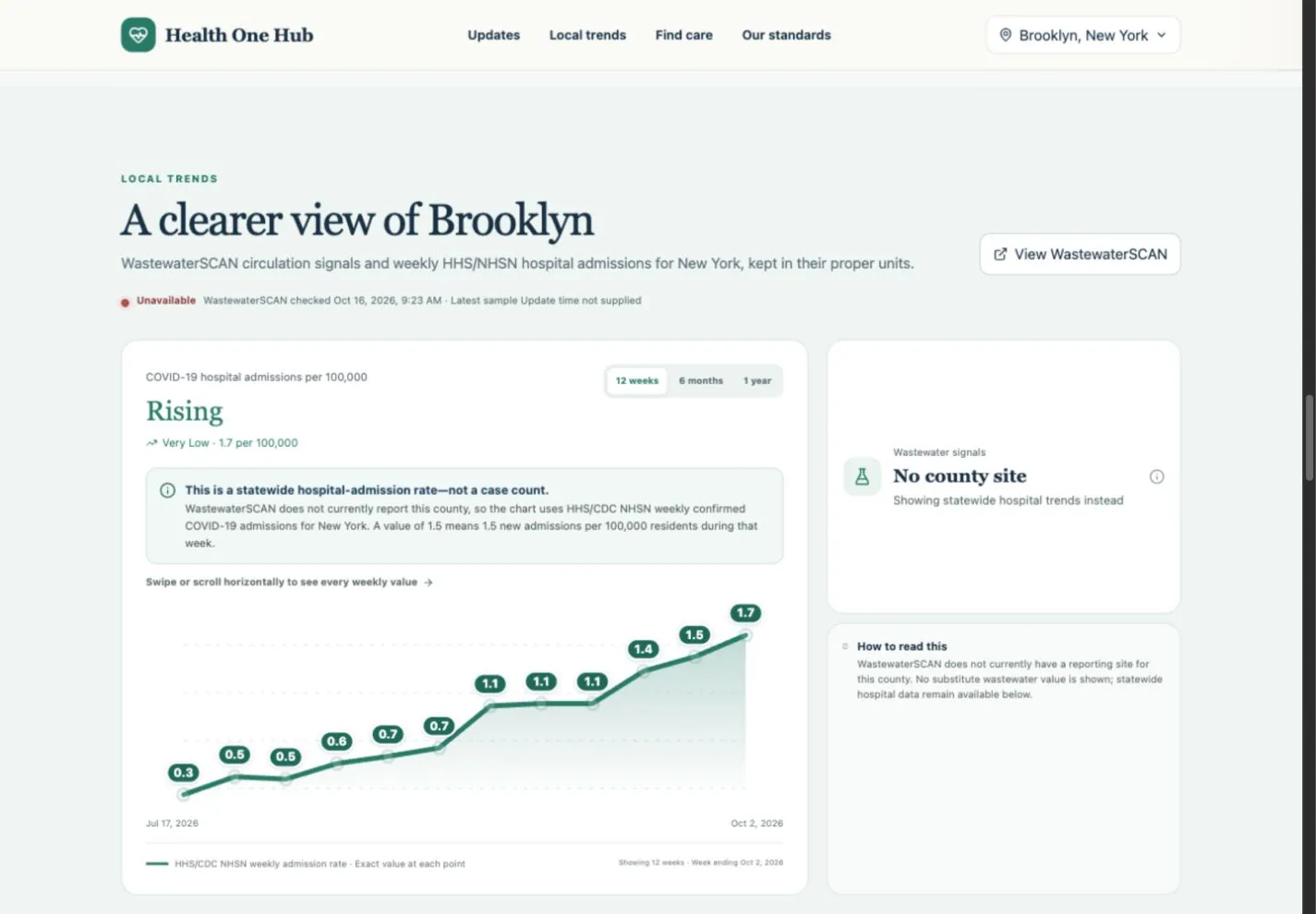
Chart labels and plain-language notes distinguish hospital admissions from wastewater measurements. When county data are missing, a clearly labeled statewide view can provide context without pretending to be local data.
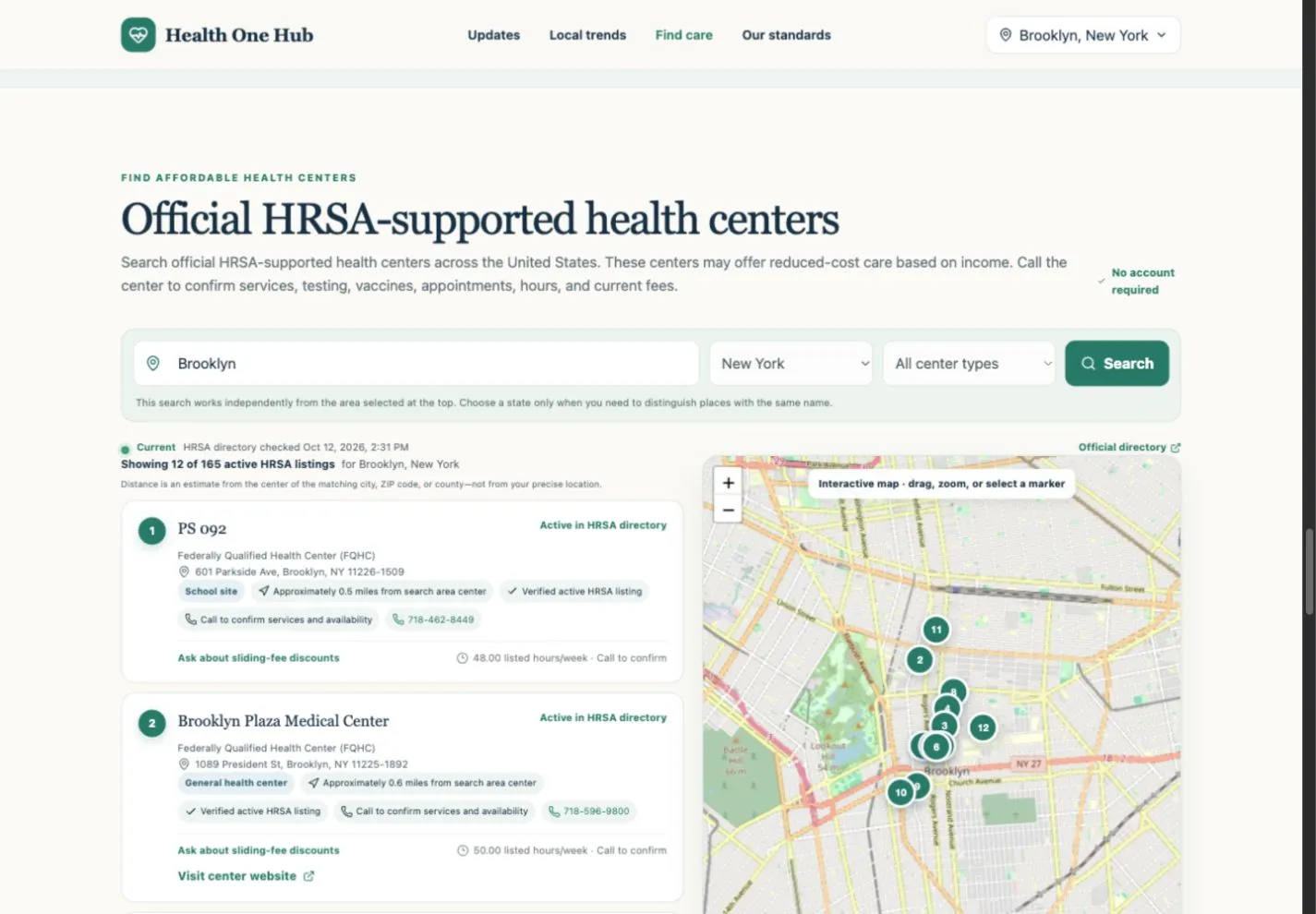
Visitors can search HRSA-supported health centers by place and center type, explore a map and find contact information. Clear reminders prompt them to call ahead to confirm services and availability.
Beyond the interface
The work extends beyond bringing data onto a page. Scheduled source updates, stored snapshots and source-health checks support the public dashboard. A review process handles changed and high-risk alert content, while the interface labels delayed or unavailable information.
Responsive layouts, keyboard navigation, visible focus states and descriptive chart labels support different ways of using the site. Methodology and corrections pages make the project’s approach open to scrutiny.
The result is a public beta that connects information with practical next steps, while staying clear about its role: a guide to public sources and resources, not a diagnosis or a substitute for professional care.
What the project demonstrates
Health One Hub shows how FizaTech connects separate data sources, automates recurring work and turns detailed information into a usable digital service. The same approach can help organizations build clearer dashboards, resource directories and internal tools around their own needs.
Built as an independent FizaTech initiative, the platform puts that approach into practice in a working public beta.
Visit the working platformScreenshots captured October 16, 2026. They illustrate the product interface and are not current health guidance. Source names identify information providers, not sponsors or endorsers.
Have data spread across systems, a resource directory to organize or a service idea to bring to life? Let’s define a focused project with clear scope and practical next steps.